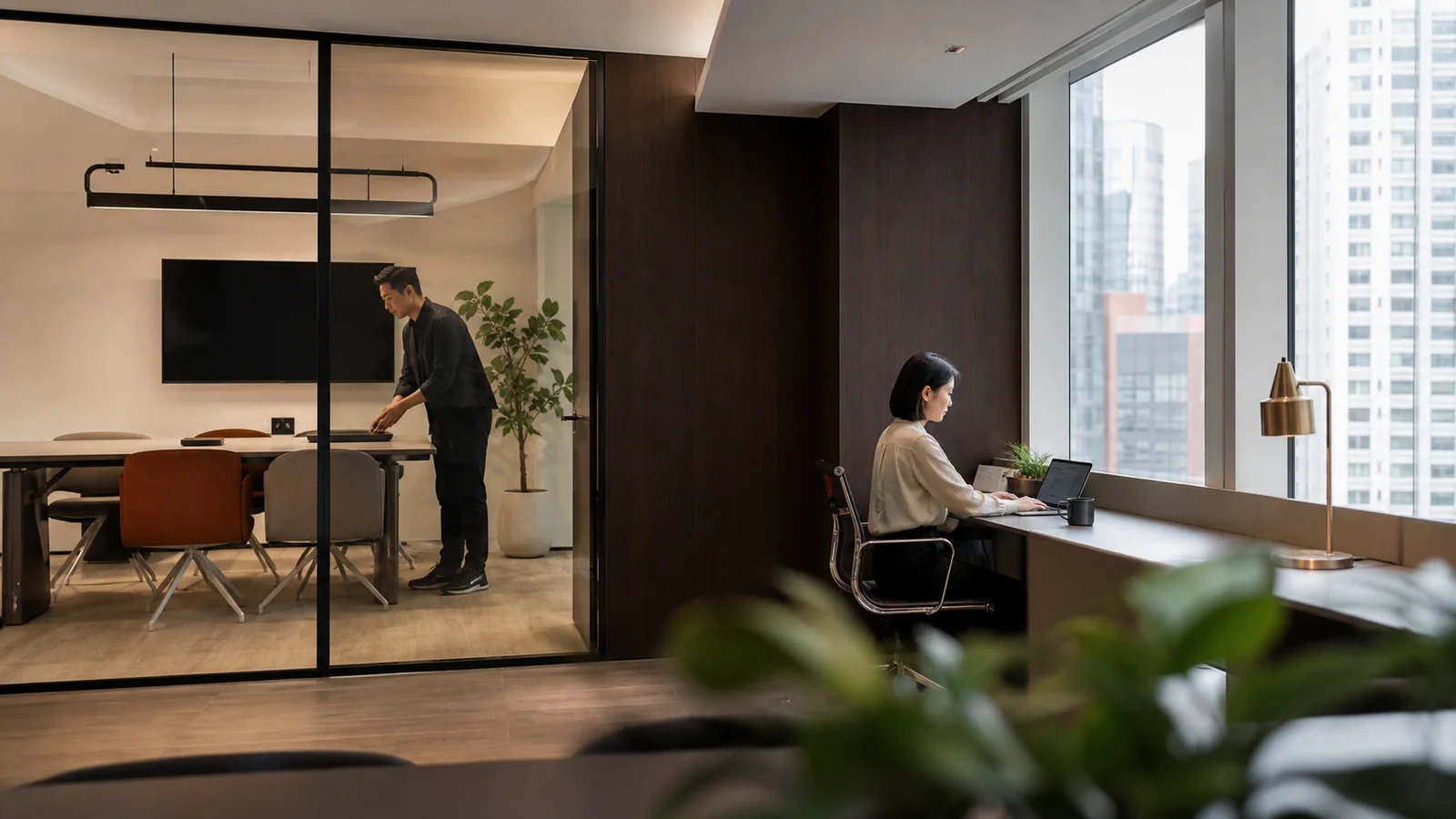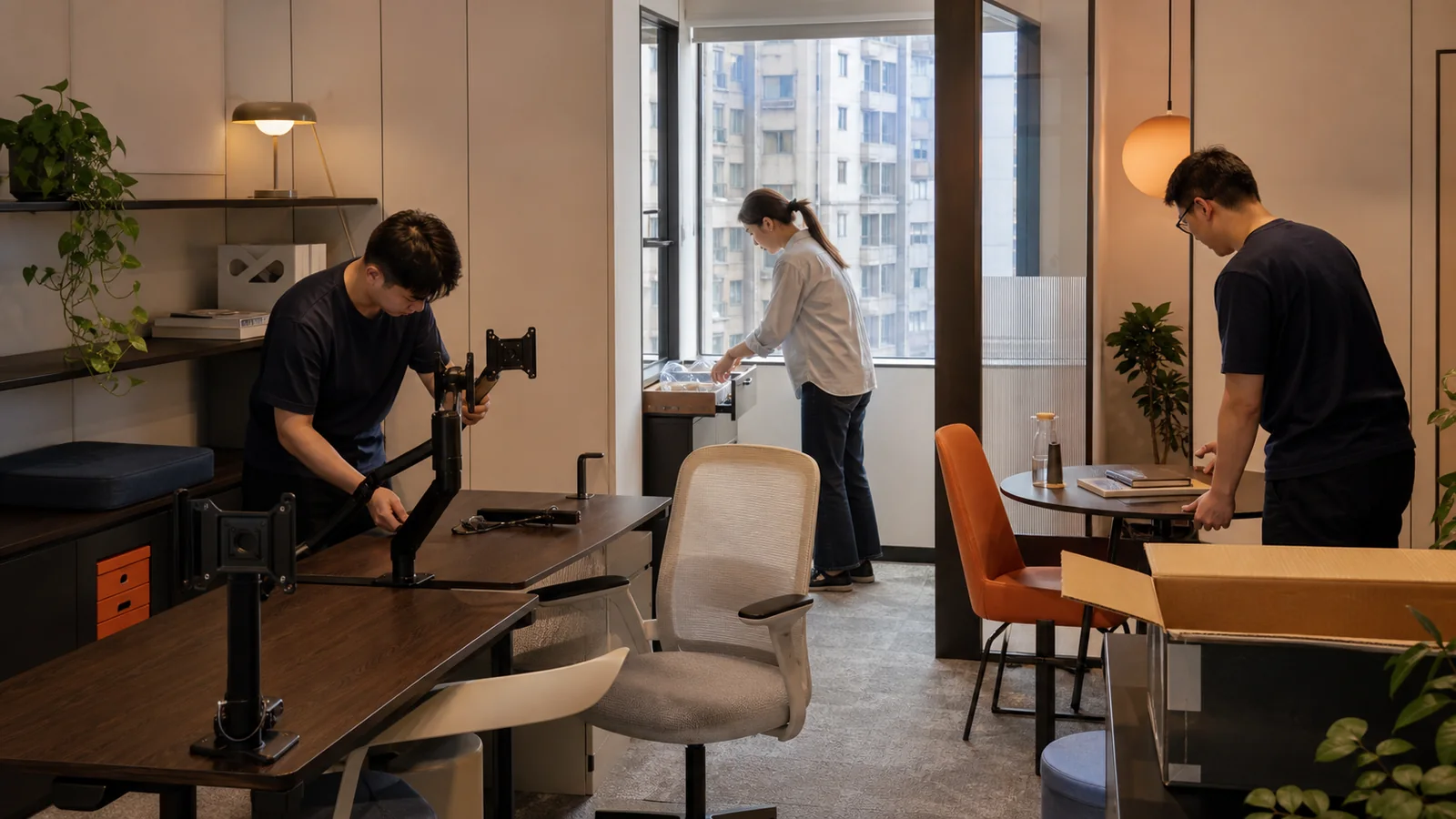
Hybrid work gives teams flexibility, but it can also create a scattered operating rhythm. Conversations happen across chats, calls, cafes and homes. Without shared structure, people may feel busy but disconnected. A flexible office for hybrid teams in Hong Kong provides a clear place to gather when the work benefits from being together.
Pillar guide
Key takeaways
- Hybrid work feels less fragmented when office days are designed around activities that benefit from being together. Planning sessions, client meetings, onboarding, reviews and creative problem solving are stronger when people share the same space.
- Not every conversation needs a room, but important alignment often does. A meeting room creates a container for decisions, sensitive discussions and hybrid calls where people need privacy and attention.
- Hybrid workers often lose time deciding where to work. A clear routine helps: choose regular office days, book desks in advance and use the same location when possible. Predictability makes flexible work feel less chaotic.
- A hybrid workspace only works if people can reach it. In Hong Kong, commute routes, district familiarity and client access all affect whether office days become a habit or an occasional exception.
- Set office days around collaboration, onboarding and important decisions.
01
Give hybrid office days a clear purpose
Hybrid work feels less fragmented when office days are designed around activities that benefit from being together. Planning sessions, client meetings, onboarding, reviews and creative problem solving are stronger when people share the same space.
Base hot desks give individuals and rotating team members a flexible coworking base without requiring a fixed office commitment every day.
02
Use meeting rooms for alignment moments
Not every conversation needs a room, but important alignment often does. A meeting room creates a container for decisions, sensitive discussions and hybrid calls where people need privacy and attention.
Teams can use meeting rooms for weekly planning, monthly reviews, client updates and workshops, then keep desk time for execution.
03
Create a repeatable flexible-office routine
Hybrid workers often lose time deciding where to work. A clear routine helps: choose regular office days, book desks in advance and use the same location when possible. Predictability makes flexible work feel less chaotic.
For teams that need more consistency, private offices can create a stable base while still allowing remote work on days that suit individual schedules.
04
Choose locations that people can actually use
A hybrid workspace only works if people can reach it. In Hong Kong, commute routes, district familiarity and client access all affect whether office days become a habit or an occasional exception.
Base offers locations across Hong Kong, helping teams choose a practical district for shared work without forcing every person into an inconvenient route.
05
How to design a hybrid week around shared workspace
A strong hybrid week does not require everyone to be in the office every day. It requires shared expectations. Decide which days are best for collaboration, which meetings should happen in person and which tasks are better left for remote focus. This reduces the sense that everyone is working on a different version of the week.
Teams can also separate office rituals by purpose. Use one day for planning, another for client meetings, and reserve ad hoc hot desk use for people who need a productive place outside home. The pattern does not need to be rigid, but it should be understandable.
Managers should review the rhythm regularly. If office days become meeting-heavy with no time to execute, people will stop valuing them. If remote days become disconnected, the team needs stronger shared routines.
Hybrid teams should also document decisions more carefully. Shared office time can create momentum, but people who were not in the room still need context. A simple follow-up note keeps flexible work from turning into an information gap.
The workspace can help by giving the team a dependable place for the moments that need presence. That might be onboarding, quarterly planning, client reviews or creative problem solving. The rest of the week can stay flexible without feeling disconnected.
A good hybrid rhythm also respects individual work. Not every office day should become a full day of meetings. People still need desk time before and after shared sessions so the trip feels productive rather than performative.
The aim is not to make hybrid work look like a traditional office week. It is to give teams enough shared structure that people know when to come together, where to work and how decisions move forward.
- Set office days around collaboration, onboarding and important decisions.
- Use meeting rooms for hybrid calls that need privacy and attention.
- Give individual contributors desk options for focused work outside home.
- Review the rhythm as team size, clients and projects change.
06
Conclusion: hybrid work needs rhythm
Hybrid work becomes stronger when teams stop treating workspace as an afterthought. Shared routines, bookable meeting rooms and flexible desks help people reconnect without giving up autonomy.
Looking for a flexible office for your hybrid team? Explore Base services, compare Hong Kong locations, or contact Base to plan a practical hybrid work rhythm.
FAQ
A few useful answers
How many office days should a hybrid team have?
There is no universal number. Choose shared days around collaboration, onboarding, planning and decisions that benefit from being together, then review attendance and outcomes.
Which workspace type suits a hybrid team?
Hot desks suit variable attendance, dedicated desks suit regular individual users, and private offices suit teams needing a consistent shared base, privacy or equipment.
Why are meeting rooms important for hybrid work?
A properly equipped room gives remote and in-person participants better audio, visibility and attention than an improvised call from an open desk.
How can a hybrid team avoid paying for unused space?
Track actual attendance, meeting-room use and recurring work patterns. Review the plan regularly and choose a provider with clear options to adjust space as needs change.