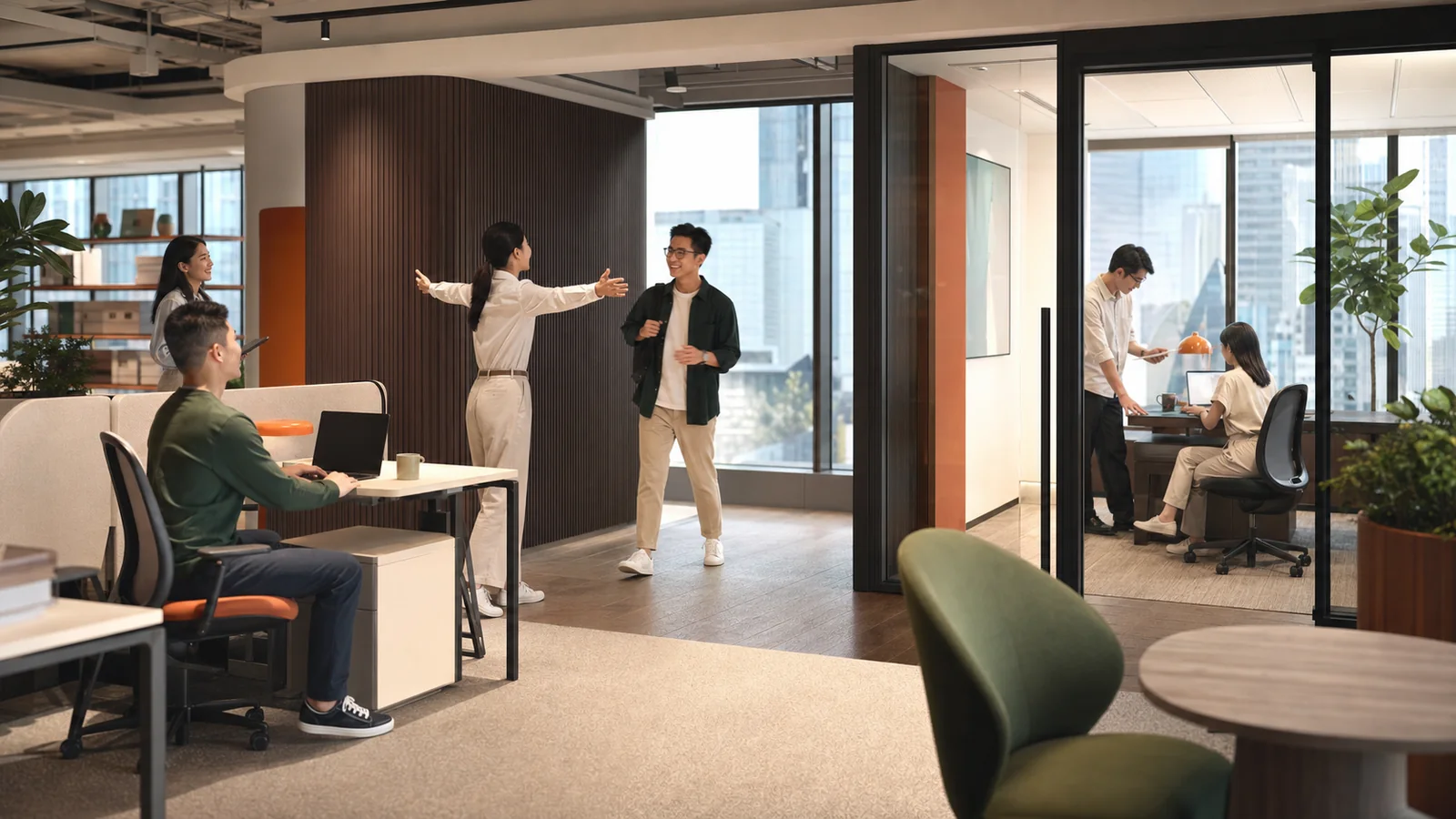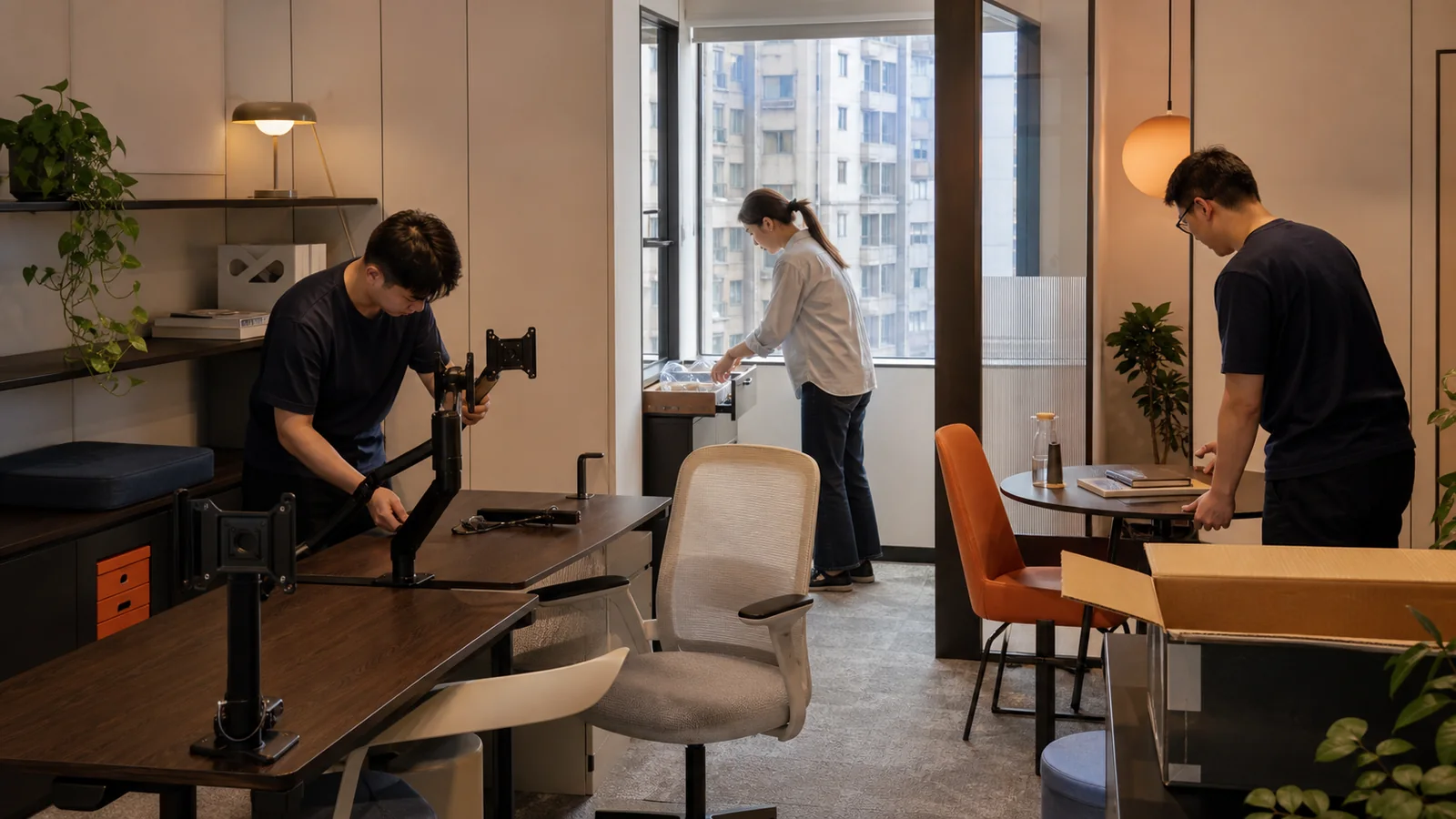
Moving a small team into a physical workspace is a useful step when remote work starts to feel scattered. The goal is not to recreate a large corporate office. It is to set up the basics that help people focus, meet clients and build a stronger operating rhythm in Hong Kong.
Practical guide
Key takeaways
- Before choosing desks or rooms, decide what the office is for. Some teams need a quiet place for daily execution. Others need a professional setting for clients, interviews or team planning. The answer should guide the layout and plan type.
- Do not assume every employee needs a permanent seat if the team works hybrid. Track who needs the office daily, who comes in for collaboration, and who only needs occasional access. This prevents overbuying space while keeping the office useful.
- Small teams often underestimate meeting room demand. Client calls, hiring interviews, investor updates, internal planning and private conversations all require a different setting from an open desk area.
- The small details matter because they affect the workday repeatedly. Secure storage, reliable internet, mail handling, reception support and simple access rules can save a young team time every week.
01
Clarify why your team needs an office
Before choosing desks or rooms, decide what the office is for. Some teams need a quiet place for daily execution. Others need a professional setting for clients, interviews or team planning. The answer should guide the layout and plan type.
If your team needs privacy and a consistent identity, private offices may be the right fit. If the team is smaller or still changing shape, dedicated desks can provide routine without the same level of commitment.
02
Plan desks around actual attendance
Do not assume every employee needs a permanent seat if the team works hybrid. Track who needs the office daily, who comes in for collaboration, and who only needs occasional access. This prevents overbuying space while keeping the office useful.
Dedicated desks work well for people who need the same setup each day. Hot desks are better for flexible attendance, visiting founders or part-time office routines.
03
Check meeting room needs early
Small teams often underestimate meeting room demand. Client calls, hiring interviews, investor updates, internal planning and private conversations all require a different setting from an open desk area.
Review how many confidential or screen-based meetings happen each week. If they are frequent, make sure meeting rooms are easy to book and suited to the way your team communicates.
04
Do not ignore storage, internet and admin support
The small details matter because they affect the workday repeatedly. Secure storage, reliable internet, mail handling, reception support and simple access rules can save a young team time every week.
A flexible office in Hong Kong should reduce operational work, not create another admin burden. Ask how guests arrive, how rooms are booked, how mail is handled and who supports issues when something does not work.
05
A simple checklist before move-in
Before a small team moves into a workspace, confirm the details that will affect the first month. Decide who needs a fixed desk, who can use flexible desk access, how often clients visit and which meetings need privacy. These decisions should come before furniture, decoration or nice-to-have extras.
The setup should also support daily operations. Teams should know how guests arrive, where calls happen, how mail is handled, what storage is available and whether team members can work without constantly asking for help. Small teams lose momentum when basic office tasks are unclear.
Finally, make the first month a test period. Track what the team actually uses: desks, rooms, calls, storage and shared areas. That makes it easier to adjust the plan before habits become inefficient.
Small teams should avoid over-designing the office before they understand the rhythm. Start with what removes friction: enough desk access, enough privacy for calls, a room for planned conversations and a setup that makes it easy to host guests professionally.
If the team is coming from remote work, set expectations early. Decide which days are for collaboration, which people need fixed seats and how the office will support onboarding. Clear rules make the workspace feel useful instead of optional and confusing.
As the team grows, keep the checklist alive instead of treating it as a one-time setup task. A workspace that fits five people may need a different desk mix, meeting rhythm or privacy level at ten people, especially if client work becomes more frequent.
- List daily desk users, occasional users and guest users.
- Estimate weekly meeting room hours before choosing a plan.
- Confirm privacy needs for finance, hiring, sales and client work.
- Check internet, access, storage, mail handling and reception support.
- Decide what would trigger an upgrade to a larger office or additional desks.
06
Conclusion: keep the setup useful and adaptable
The best small team office setup is practical from day one and flexible enough to change. Start with the work your team actually does, then choose the mix of desks, rooms, privacy and support that removes friction.
Looking for a flexible workspace in Hong Kong? Explore Base private offices, dedicated desks and meeting rooms, or contact Base to plan a setup for your team.
FAQ
A few useful answers
What should a small team decide before moving into an office?
Confirm who attends, how many fixed seats are needed, where calls happen, meeting-room demand, storage, visitor access and who handles daily workspace issues.
Are furniture, internet and cleaning included?
Inclusions depend on the workspace plan. Request a written list covering furniture, internet, utilities, cleaning, meeting rooms, printing, mail and any metered charges.
How should a small team plan for growth?
Plan for the next six to twelve months rather than an uncertain distant future. Confirm how additional seats, larger offices and plan changes work before committing.